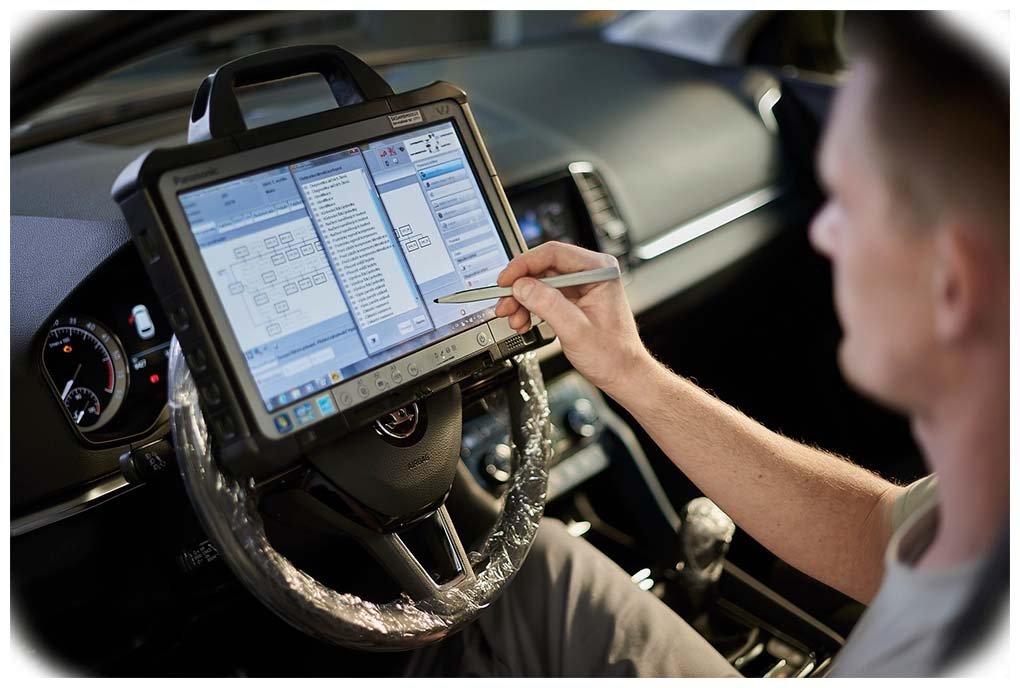
Diagnosing the complex electrical issues that can plague modern vehicles might seem like deciphering a secret code. From a flickering dashboard light to a no-start condition, electrical problems are notorious for being tricky, often leading to frustrating guesswork and costly repairs. But here’s the good news: with the right Tools and Software for Automotive Electrical Diagnostics, you can peel back those layers of mystery, pinpoint the root cause, and get your vehicle running smoothly again.
Whether you're a seasoned professional or a dedicated DIYer, equipping yourself with a powerful diagnostic arsenal isn't just about fixing problems—it's about understanding your vehicle's heartbeat, preventing future failures, and saving a significant chunk of change. This guide will walk you through the essential hardware and software that turn electrical riddles into straightforward solutions.
At a Glance: Your Diagnostic Blueprint
- Start Smart: Begin with fundamental tools like an OBD-II reader, digital multimeter, and test light.
- Upgrade Your Arsenal: Add advanced tools such as oscilloscopes and thermal cameras as your skills evolve.
- Leverage Software: Use OBD-II software with an ELM327 adapter for deeper insights into your vehicle's ECU.
- Vehicle Compatibility is Key: Always verify tool and software compatibility with your specific make and model.
- Safety First: Prioritize safety gear and procedures when working with automotive electrical systems.
- Continuous Learning: Electrical diagnostics is an evolving field; stay curious and keep learning.
The Unseen Heartbeat: Why Electrical Diagnostics Matter More Than Ever
Today's vehicles are rolling computers, packed with intricate electrical systems that control everything from engine timing and braking to infotainment and safety features. A single loose wire, a corroded connection, or a failing sensor can throw the entire system into disarray. Unlike purely mechanical issues, electrical problems can be intermittent, hidden, and often defy simple visual inspection.
That's where specialized diagnostic tools and software come into play. They act as your vehicle's physicians, allowing you to "listen" to its electronic pulses, "read" its error messages, and "see" the invisible flow of current. Without them, you're essentially flying blind, replacing parts based on educated guesses rather than precise data. This not only wastes time and money but can also lead to more serious, overlooked issues down the road.
Your Essential Diagnostic Toolkit: The Hardware Heroes
Every successful diagnosis begins with reliable hardware. These are the physical tools that help you measure, test, and visually inspect the electrical system. Think of them as the hands-on instruments in your diagnostic operating room.
1. The OBD-II Code Reader: Your Vehicle's Translator
The On-Board Diagnostics II (OBD-II) system has been standard on all cars and light trucks sold in the US since 1996. It's designed to monitor various vehicle systems for emissions-related faults. An OBD-II code reader plugs directly into your car's diagnostic port, usually located under the dashboard, and acts as a translator, reading the Diagnostic Trouble Codes (DTCs) stored in your vehicle's Electronic Control Unit (ECU).
- How it Helps: It eliminates guesswork by providing specific codes (e.g., P0302 for a misfire on cylinder 2) that point you towards the problematic system or component.
- Key Features: Look for models that offer live data streams (real-time sensor readings), freeze-frame capture (a snapshot of data at the moment a code was set), and the ability to clear codes.
- Pro Tip: Advanced OBD-II readers offer bidirectional control, letting you activate components (like a fuel pump or an ABS solenoid) directly from the tool to test their functionality without needing to start the engine or manually trigger them. This saves immense time and confirms component health.
2. Digital Multimeter (DMM): The Precision Analyst
A DMM is arguably the most fundamental and versatile electrical diagnostic tool. It measures voltage (volts), resistance (ohms), and current (amperes), providing precise numerical readings for various electrical parameters.
- How it Helps: Essential for testing batteries, alternators, fuses, relays, sensors, and wiring continuity. You can use it to check for proper voltage supply, identify excessive resistance in a circuit (which can cause heat and power loss), or detect parasitic drains by measuring current draw when the vehicle is off.
- Key Features: Auto-ranging (automatically selects the correct range for the measurement), data hold (freezes the reading on the display), and a backlit display for low-light conditions are highly recommended.
- Pro Tip: For automotive work, invest in a DMM with auto-range for voltage, and a dedicated 10-amp fused input for current measurements to protect the meter and prevent damage from accidental overloads. Understanding voltage drops across components is crucial for diagnosing poor connections or failing circuits.
3. Test Light (Circuit Tester): The Quick Verifier
Sometimes, you just need a quick "yes" or "no" answer to whether power is present at a specific point. That's where a simple test light shines. It's a probe with an indicator light (bulb or LED) that illuminates when it detects current.
- How it Helps: Quickly verifies power or ground presence at fuses, connectors, and wiring. Great for checking if a circuit is "hot" or if a ground connection is solid.
- Key Features: A sharp, insulated probe for safely piercing wires or contacting terminals, an insulated handle, and a sufficiently long lead with an alligator clip. Some have built-in resistors to protect sensitive circuits.
- Pro Tip: Always use a fused test light, especially when working on modern vehicles with sensitive electronics. This prevents accidental shorts from damaging components or the vehicle's ECU. Avoid using incandescent test lights on low-voltage, high-impedance circuits (like sensor signals), as they can draw too much current and give misleading readings or damage components. LED test lights are generally safer for these applications.
4. Noid Light Set: The Fuel Injector's Witness
If your engine isn't getting fuel, a noid light set can quickly tell you if the fuel injectors are receiving their electrical pulse from the ECU.
- How it Helps: You disconnect an injector and plug in the corresponding noid light adapter. When the engine is cranked, the light flashes if the injector driver circuit is sending a pulse. This helps you isolate an injector driver failure (electrical) from a clogged injector or fuel delivery issue (mechanical).
- Pro Tip: Combine a noid light test with a scan tool capable of reading real-time injector timing and pulse width. If the noid light flashes but the engine still misfires, the issue is likely mechanical (clogged injector, low fuel pressure) rather than electrical.
5. Battery Load Tester: Stress-Testing Your Powerhouse
Your car battery might show 12.6 volts with a DMM, but can it maintain that voltage under the heavy load of cranking the engine? A battery load tester simulates starting conditions.
- How it Helps: It applies a controlled load to the battery and measures its voltage under stress. This reveals weak cells or insufficient cranking amps, preventing unexpected no-starts.
- Pro Tip: Always test a fully charged battery for the most accurate results. A "surface charge" can give a false positive reading. Compare the measured CCA (Cold Cranking Amps) under load to the battery's rated CCA specification.
6. Alternator Tester / Regulator Test Tool: The Charging System's Report Card
The alternator recharges your battery and powers the vehicle's electrical system while the engine is running. An alternator tester checks its performance.
- How it Helps: Monitors alternator output voltage and current at different RPMs. It determines if the charging system maintains proper voltage levels (typically between 13.8V and 14.4V) and current output, detecting under- or over-charging conditions that can damage the battery or other electrical components.
- Pro Tip: A healthy charging system should consistently maintain voltage between 13.8V and 14.4V at idle and around 2,000 RPM, with all major electrical accessories (headlights, AC, defroster) turned on. Significant voltage drops or spikes indicate a failing alternator or voltage regulator.
7. Insulation Resistance Tester (Megohmmeter): Unmasking Hidden Leaks
Parasitic drains are notoriously difficult to diagnose because the problem isn't always obvious. An insulation resistance tester (megohmmeter) is a specialized tool that applies high voltage to wiring to measure the integrity of its insulation.
- How it Helps: It reveals hidden shorts, frayed insulation, or leakage paths that might cause a small but continuous current draw, slowly draining your battery over time. This is particularly useful for older vehicles or those with aftermarket electrical accessories.
- Pro Tip: Always discharge any capacitors and isolate the circuit you're testing before using a megohmmeter to avoid damage to sensitive electronics or personal injury. Never use it on circuits containing ECUs or other modules without complete isolation.
8. Automotive Oscilloscope: The Waveform Whisperer
For complex diagnostics, especially with modern sensors, ignition systems, and communication networks (CAN bus), a DMM simply isn't enough. An automotive oscilloscope displays voltage waveforms over time, providing a visual representation of electrical signals.
- How it Helps: It allows you to see the shape and timing of electrical signals, not just their average value. This is critical for diagnosing intermittent faults, waveform distortions, sensor glitches, ignition coil issues, and communication errors that standard tools would miss.
- Pro Tip: Many oscilloscope manufacturers and online communities provide libraries of known-good waveforms for various sensors and circuits. Use these as reference points to compare against the waveforms you capture from your vehicle. Mastering an oscilloscope takes practice but unlocks a new level of diagnostic capability.
9. Thermal Imaging Camera: The Heat Detector
Electrical resistance generates heat. A thermal imaging camera visualizes temperature differences, allowing you to "see" hot spots that indicate resistance problems.
- How it Helps: Quickly identifies overheating circuits, loose or corroded connections, failing resistors, or overloaded wires without direct contact. Pinpoints potential failure points before they become critical. Great for finding parasitic drains by observing warm relays or modules that should be off.
- Pro Tip: Use a thermal camera in conjunction with a DMM. Once you spot a hot connection, use your DMM to measure the voltage drop across it. A significant voltage drop (e.g., more than 0.1-0.2 volts) confirms excessive resistance and heat.
10. Wiring Diagram App or Tablet Software: Your Electrical Roadmap
Modern vehicle wiring diagrams are incredibly complex, spanning hundreds of pages in service manuals. Digital wiring diagram software makes navigating this complexity manageable.
- How it Helps: Provides instant, searchable access to complete vehicle wiring diagrams, connector pinouts, component locations, and color codes. Saves immense time compared to flipping through physical manuals. Many offer offline access, bookmarking, and layered views to simplify complex circuits.
- Pro Tip: Look for apps or software that allow you to sync notes and screenshots across devices, which is excellent for team collaboration or documenting your diagnostic process. Understanding how to interpret these diagrams is crucial for effective electrical troubleshooting. To truly excel, it helps to Explore our wire diagram hub and understand the basics of electrical flow and symbols.
The Digital Brains: OBD-II Software for Deeper Insights
While hardware tools measure and test, OBD-II software takes the raw data from your vehicle's ECU and translates it into actionable information. These programs, often used with an ELM327 adapter (a small device that connects your car's OBD-II port to a PC, laptop, or mobile device via Bluetooth, Wi-Fi, or USB), provide "dealer-level" diagnostic capabilities at a fraction of the cost.
Understanding OBD-II Software Capabilities
Most OBD-II software provides:
- DTC Reading/Clearing: The ability to read and clear generic (P0xxx) and often manufacturer-specific (P1xxx) codes.
- Live Data: Real-time monitoring of various sensor readings (engine RPM, coolant temp, O2 sensor voltage, fuel trims, etc.).
- Freeze Frame Data: A snapshot of sensor values at the moment a DTC was set.
- I/M Readiness: Checks if all emission-related monitors have run and completed their self-tests.
- Onboard Monitoring Tests: Results of various self-tests performed by the ECU.
- Oxygen Sensor Tests: Specific data related to O2 sensor performance.
Beyond these basics, advanced software offers deeper functionality. The most crucial factor when choosing OBD2 software is vehicle compatibility. Many programs offer free trials, allowing users to test functionality before purchase.
Let's dive into some popular options:
1. TOAD Pro (Total OBD & ECU Auto Diagnostics Pro)
- Core Functionality: Stands out by offering ECU programming features, often found only in high-end professional scanners costing hundreds or thousands of dollars. This includes performance tuning, emissions compliance, key programming, and enabling/disabling vehicle features.
- Diagnostic Power: Provides extensive PIDs (Parameter IDs), adjustable sampling rates for detailed data capture, and supports active testing (bi-directional control) for actuators.
- Compatibility: Known for wider vehicle compatibility than some specialized tools. Windows-only.
2. FORScan
- Core Functionality: A highly regarded, comprehensive diagnostic and customization software specifically for Ford, Lincoln, Mazda, and Mercury vehicles. It's almost indispensable for owners of these brands.
- Capabilities: Allows users to view and re-program most electronic modules beyond just the engine (e.g., battery monitoring system resets, oil light resets, diagnosing SRS, ABS, and transmission systems, programming new keys).
- Compatibility: Available on Windows, Android, and iOS, though the desktop version offers the most features. Works with any ELM327 adapter (though some advanced functions require a modified ELM327 with MS-CAN support).
3. TouchScan
- Core Functionality: An excellent choice for beginners due to its user-friendly interface. It excels at monitoring and diagnosing the engine of any OBD2-compliant vehicle with real-time, customizable data displays.
- Capabilities: Reads over 90 sensors (PIDs), supports oxygen sensor tests, onboard monitoring, battery voltage, and fuel economy calculations. Offers dealer-level diagnosis at an affordable price.
- Features: I/M readiness, data recording and playback, real-time graphing, and free lifetime updates.
4. OBD Auto Doctor
- Core Functionality: Renowned for its wide compatibility across various operating systems (Windows, Mac, Android, iOS) and vehicle makes (any OBD2 port).
- Capabilities: Quickly scans and retrieves fault codes (often in under 30 seconds), displays sensor data numerically or graphically, checks emissions readiness, and monitors fuel economy.
- Features: Offers a free version with basic functions, making it a great starting point for many users.
5. AutoEnginuity
- Core Functionality: A powerful diagnostic tool that can read trouble codes and perform bi-directional active tests that some other software might miss.
- Capabilities: Diagnoses airbag, anti-lock brakes, and electronic instruments. Supports OBD2 and EOBD compliant vehicles (Europe). Known for its robust OBD2 diagnostics, including detailed Mode 6 data.
- Features: Provides free updates.
- Limitation: While excellent for OBD2, its non-OBDII functions (like ABS or SRS diagnostics) are not universally supported across all vehicles and often require specific enhanced interface cables. Windows-only.
6. EngineCheck Pro (Gendan)
- Core Functionality: An intuitive, professional program designed for quick engine scans and efficient diagnosis of "Check Engine Light" causes (often under 10 seconds).
- Capabilities: Focuses on reading OBD2 trouble codes, freeze frame data, emissions tests, and fuel system status.
- Features: Provides on-screen DTC definitions, data saving and playback, live data graphics, and free updates.
- Limitation: Primarily supports OBD2 modules and sensors, less emphasis on non-engine systems.
7. Car Scanner ELM OBD2
- Core Functionality: A streamlined, low-cost app highly compatible with almost any device (Windows, Android, iOS) and most OBD2 vehicles.
- Features: User-friendly interface, highly configurable dashboards, and many core functions are available in the free version. Frequent free updates are a plus.
- Limitation: Sensor support can vary significantly by vehicle, and some users report it may not accurately measure speed or voltage on all models.
8. EasyOBDII Premium Software
- Core Functionality: An affordable and user-friendly software for in-depth OBD diagnostics.
- Capabilities: Allows viewing freeze frame data, live sensor data, I/M readiness status, and all trouble codes (including manufacturer-specific and pending codes).
- Features: Offers a free trial, a customizable graphical interface, a helpful virtual vehicle dashboard, and autosave configuration.
- Limitation: No mobile support and cannot read enhanced codes from non-OBD systems like airbags or ABS.
9. Movi Pro
- Core Functionality: Designed specifically for iOS devices, Movi Pro focuses on monitoring and diagnosing engine issues in OBDII and EOBD compliant vehicles.
- Capabilities: Reads and clears DTCs, monitors engine performance and fuel economy in real-time, provides virtual horsepower and torque readings, and records driving data.
- Features: Features a sophisticated interface for graphing up to four values simultaneously and offers audible alerts.
- Limitation: Primarily engine-focused; no diagnosis of non-OBD systems (e.g., airbags, transmission). No Windows or Android compatibility.
10. OBDWiz
- Core Functionality: Supports over 90 PIDs from OBD2, JOBD (Japanese OBD), and EOBD (European OBD) compliant vehicles.
- Capabilities: Features customizable dashboards that display multiple meters and real-time sensor data. It can also send commands to the vehicle (depending on the ELM327 adapter) and calculates fuel economy, alongside displaying battery voltage.
- Features: Offers unlimited free updates and plots multiple values on screen for comparative analysis.
- Limitation: Does not diagnose transmission, ABS, or SRS systems. Limited software compatibility with some niche vehicle models.
Building Your Diagnostic Command Center: A Phased Approach
You don't need every tool on day one. A strategic approach to acquiring tools and software will serve you best.
Starting with the Essentials (Beginner)
For fundamental diagnostics and general maintenance, begin with:
- OBD-II Code Reader: Get one that shows live data.
- Digital Multimeter (DMM): An auto-ranging model.
- Fused Test Light: Your go-to for quick power checks.
- Wiring Diagram App/Software: Crucial for understanding circuits.
With this basic kit, you can address most "Check Engine Light" issues, diagnose dead batteries, test fuses, and verify power to components.
Expanding Your Capabilities (Intermediate)
As your skills grow and you tackle more complex problems, add:
- Battery Load Tester & Alternator Tester: For robust charging system assessments.
- Noid Light Set: Essential for fuel injection diagnostics.
- Thermal Imaging Camera: A game-changer for finding hidden resistance.
- Specialized OBD-II Software: If you frequently work on specific brands (like FORScan for Fords).
This expanded set allows for deeper dives into charging system failures, fuel delivery issues, and identifying elusive electrical shorts.
Mastering Advanced Diagnostics (Expert)
For truly complex, intermittent, or high-level issues, consider:
- Automotive Oscilloscope: The ultimate tool for understanding signal integrity and timing.
- Insulation Resistance Tester (Megohmmeter): For tracking down elusive parasitic drains and hidden wire damage.
- Advanced Bi-directional Scan Tool Software: Tools like TOAD Pro or AutoEnginuity (with enhanced vehicle packages) offer programming and comprehensive system control.
At this level, you're not just reading codes; you're analyzing waveforms, testing component response directly, and even reprogramming modules, essentially matching dealership capabilities.
The Synergy: Hardware and Software Working Together
The most powerful diagnostic setups combine hardware and software. An OBD-II reader might tell you a sensor is faulty, but your DMM can confirm its voltage output, and an oscilloscope can show you the signal's exact waveform and any noise or glitches. Similarly, software might point to a parasitic drain, while a thermal camera helps you locate the hot spot in a relay, and a megohmmeter confirms insulation breakdown. They are complementary, each offering a unique perspective on the vehicle's electrical health.
Beyond the Tools: Best Practices for Electrical Diagnostics
Having the right tools is only half the battle. Knowing how to use them effectively and safely is equally important.
1. Safety First, Always
Working with automotive electrical systems carries risks.
- Disconnect the Battery: When performing tests that involve removing components or probing wires, disconnect the negative terminal of the battery to prevent accidental shorts or activation of airbags.
- Wear PPE: Always wear safety glasses to protect against sparks or splashes, and insulated gloves when working with high-voltage systems (like hybrids or EVs).
- Understand Circuitry: Never assume a wire is "dead." Test for voltage before touching or cutting.
2. Adopt a Systematic Approach
Don't just randomly probe. Follow a logical diagnostic process:
- Gather Information: Ask the driver detailed questions about the symptoms (when did it start, what are the conditions, is it intermittent?).
- Verify the Complaint: Can you replicate the issue?
- Check for DTCs: Use your OBD-II scanner.
- Consult Wiring Diagrams: Understand how the circuit is supposed to work. This is where your digital wiring diagram software becomes invaluable.
- Test Methodically: Start from the power source and work your way to the component, or vice versa, depending on the fault. Use your DMM, test light, and other tools to confirm voltage, ground, and signal integrity at each point.
- Verify the Repair: After fixing an issue, clear the codes and test drive the vehicle to ensure the problem is resolved and no new codes appear.
3. Interpret Data, Don't Just Read It
Raw data from your scan tool or DMM is meaningless without context.
- Know Your Specs: Understand what normal voltage, resistance, or sensor readings should be for your specific vehicle. Manufacturer service information is critical here.
- Look for Patterns: Is a sensor reading consistently high or low? Are multiple systems affected?
- Compare Against Known Good: Use reference values, waveforms, or even compare readings to a known-good vehicle if available.
4. The Power of Wiring Diagrams
Modern vehicle electrical systems are incredibly complex. Trying to diagnose an issue without understanding the circuit flow is like trying to navigate a new city without a map. Digital wiring diagrams provide:
- Component Locations: Pinpoint where sensors, modules, and relays are physically located.
- Circuit Paths: Trace how power and signals flow from component to component.
- Connector Pinouts: Identify specific wires within multi-pin connectors.
- Ground Points: Crucial for diagnosing poor grounds, which are common culprits.
Investing time in learning how to read and interpret these diagrams will dramatically improve your diagnostic speed and accuracy.
5. Common Pitfalls to Avoid
- Shotgunning Parts: Replacing parts without proper diagnosis is expensive and often doesn't solve the real problem.
- Ignoring Intermittent Faults: These are the toughest, often requiring an oscilloscope or data logging over time to catch. Don't dismiss them.
- Poor Ground Connections: Many electrical issues stem from corroded, loose, or inadequate ground points. Always check grounds.
- Ignoring Manufacturer TSBs/Recalls: Technical Service Bulletins (TSBs) often highlight known issues and diagnostic procedures for specific models.
- Improper Tool Use: Using an incandescent test light on a sensitive circuit, or probing with a DMM on the wrong setting, can damage components or give false readings.
Demystifying Common Electrical Gremlins
Q: How do I find a parasitic draw that's killing my battery?
A: This is a classic electrical puzzle. Start by ensuring the battery and charging system are healthy. Then, use a DMM in series with the negative battery cable to measure the current draw with the car off and all doors closed (allowing modules to "sleep"). A normal draw is usually under 50 milliamps (0.050 A), often much lower. Once you have a base reading, start pulling fuses, one at a time, until the current draw drops significantly. That fuse circuit is your culprit. An insulation resistance tester can then help find specific shorts within that circuit, and a thermal camera might even point to a warm relay or module that's drawing power.
Q: My car has an intermittent electrical fault. What's the best approach?
A: Intermittent faults are challenging because they don't always appear when you're ready to test. An automotive oscilloscope is incredibly valuable here, as it can capture glitches or signal dropouts that happen in milliseconds. Data logging with advanced OBD-II software (like TouchScan or TOAD Pro) can also record sensor data over time, helping you identify conditions (e.g., specific temperatures, RPMs, or vibrations) when the fault occurs. Sometimes, simply wiggling wiring harnesses or connectors while monitoring with an oscilloscope can reveal a loose connection.
Q: My check engine light is on, but the car runs fine. Should I worry?
A: Yes, you should always investigate a Check Engine Light (CEL). While the car might seem to run fine, the CEL indicates an issue that could affect emissions, fuel economy, or lead to more serious problems if ignored. Use an OBD-II code reader to pull the DTCs. Even if it's a "minor" code (like a loose gas cap, which triggers an EVAP system fault), addressing it promptly is best practice. Some issues, like a failing catalytic converter, might not immediately impact performance but are very expensive to fix later.
Your Next Steps: Empowering Your Electrical Journey
The world of automotive electrical diagnostics is constantly evolving, much like the vehicles themselves. To stay ahead, remember these key takeaways:
- Invest in Quality: Good tools are an investment, not an expense. They save you time, frustration, and money in the long run.
- Learn Continuously: Read service manuals, watch tutorials, and practice with your tools. Each successful diagnosis builds your confidence and expertise. Online communities and dedicated forums are invaluable resources for learning from others.
- Think Systematically: Approach every diagnostic challenge with a logical plan. Don't jump to conclusions, and always verify your findings.
- Embrace Technology: The integration of hardware and software is the future of automotive repair. Leverage both to gain a comprehensive understanding of vehicle faults.
By equipping yourself with the right Tools and Software for Automotive Electrical Diagnostics and adopting a methodical approach, you'll transform from guessing to knowing, tackling even the most elusive electrical gremlins with confidence and precision. Happy diagnosing!